When the cycle is irregular,
clarity comes first.
PCOS can affect periods, ovulation, skin, weight, mood and fertility differently for different women. Your plan should reflect your pattern.
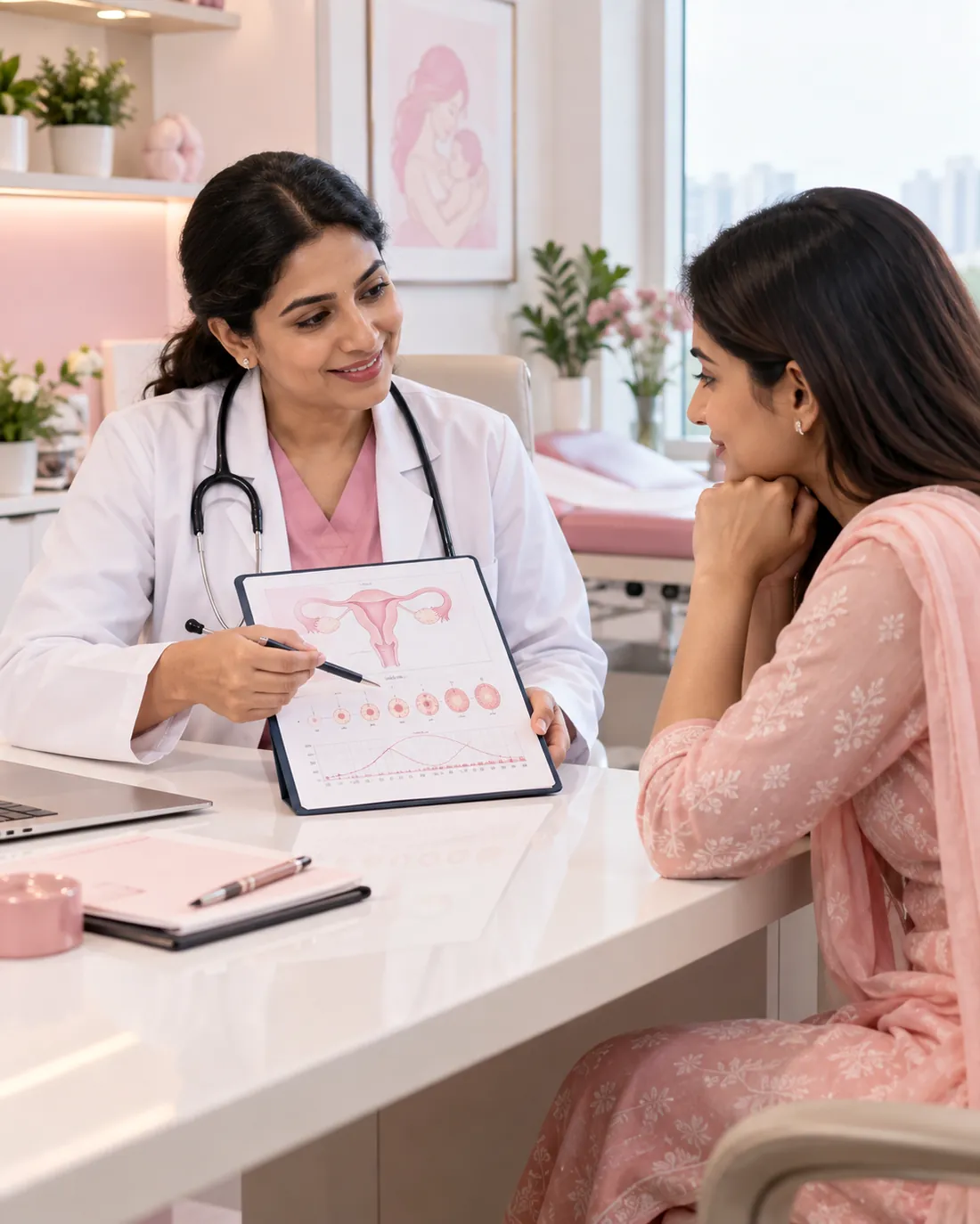
PCOS is not one identical story.
Two people can have the same diagnosis and very different symptoms, routines and fertility goals. That is why history, cycle pattern, reports and lifestyle context matter.

Start from what you already know.
Cycle pattern
How often periods come, how long they last and whether ovulation appears regular.
Explore →02Lifestyle context
Sleep, activity, stress, food habits and weight changes may be relevant depending on the individual.
Explore →03Couple fertility
If you are trying to conceive, partner evaluation can also be part of the conversation.
Explore →Her side. His side.
One shared plan.
Fertility care becomes easier to follow when both partners are part of the conversation from the beginning.
See our approach →
Quick answers, without the jargon.
Can someone with PCOS conceive?+
Many people with PCOS do conceive. The right next step depends on age, ovulation, overall health, partner factors and other clinical details.
Is PCOD the same as PCOS?+
The terms are often used interchangeably in everyday conversation in India, though clinicians may use PCOS more commonly. Your symptoms and evaluation matter more than the label alone.
Do irregular periods always mean PCOS?+
No. Irregular cycles can have different causes, so a proper evaluation is important before assuming the reason.
Bring the reports.
Bring the questions.
Start with a private consultation and a clearer view of what deserves attention next.